
Marion County Directory Collections
The core Indianapolis City Directory Collection contains all published Indianapolis directories from 1855 through 2001. IU Indianapolis built the digital route with Indianapolis Public Library and Indiana State Library. The collection links every year through Internet Archive, while only a limited subset is hosted directly by IU Indianapolis. Printed and microfilm copies provide a second access path when a scan is hard to read.
| Collection | Years | Where held | Access route |
|---|---|---|---|
| Indianapolis City Directory Collection | 1855-2001 | IU Indianapolis, IndyPL, State Library | Internet Archive links, selected direct scans, print, microfilm |
| IndyPL Indianapolis directories | 1855 onward | Central Library and local-history holdings | Consult staff for shelf or scan access |
| Suburban directories | Added in 1957 | IndyPL house-history collection | Library consultation |
| Business directories | Multiple historic years | IU collection, IndyPL, State Library | Digital and physical volumes |
| Reverse and telephone material | Exact full run not verified | IndyPL, State Library, IHS | Ask for a specific title and year |
Publisher names vary by volume. Read the title page rather than labeling the entire run with one commercial imprint. The general IU catalog describes 14 directly hosted directories from 1858 to 1980, but that is a hosted subset, not a contradiction of the full linked collection. Marion County city directories also vary in layout, coverage, and the way suburban places are named.
The official city directory collection screen below is the first stop for choosing an exact year.
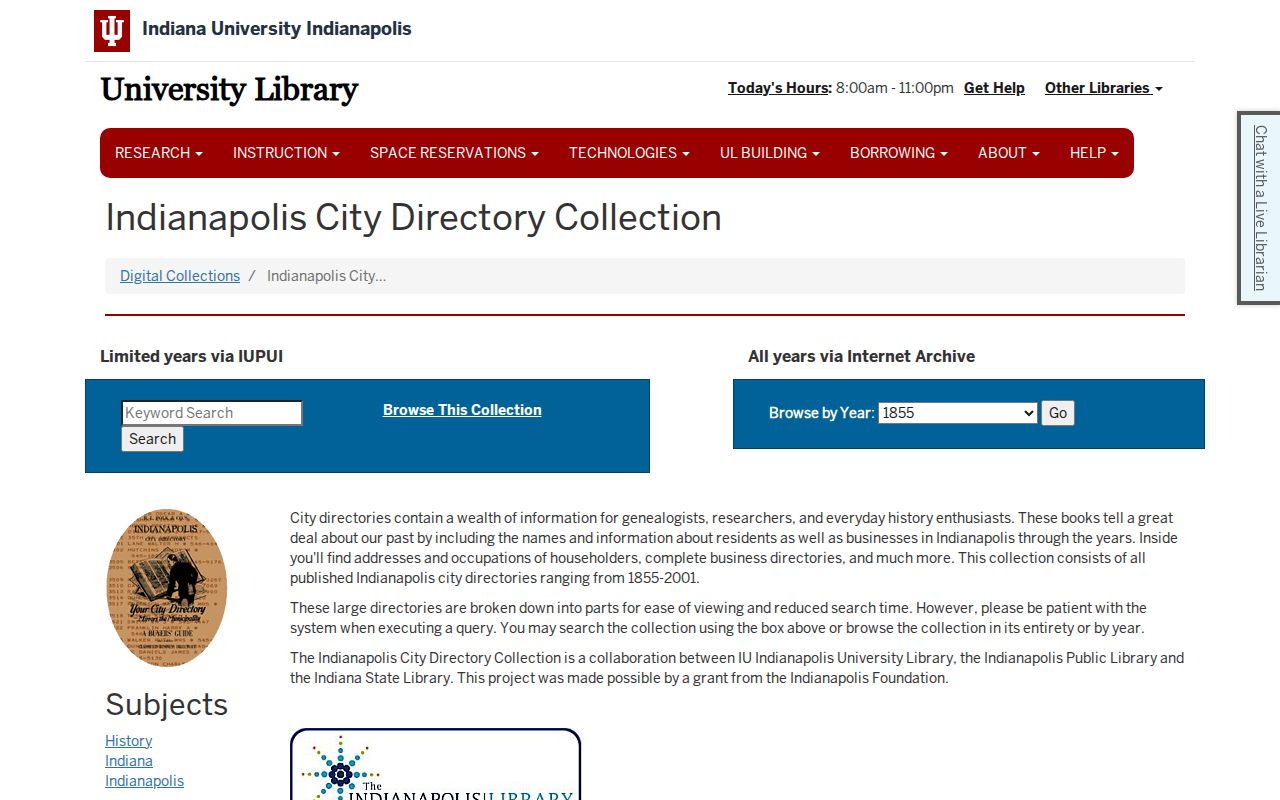
Its year links preserve the volume context needed to cite an entry accurately.
Access Marion County Directory Shelves
Online scans are only one channel. Indianapolis Central Library and IndyPL Special Collections provide physical consultation, local-history files, maps, newspapers, and staff help. Ancestry Library Edition is available at library branches or on library Wi-Fi, while public-domain scans can be viewed online. Ask for the exact directory year, old street name, ward or township, and likely community label.
The IndyPL genealogy portal gathers branch databases, obituary tools, Digital Indy, county histories, and local partners.
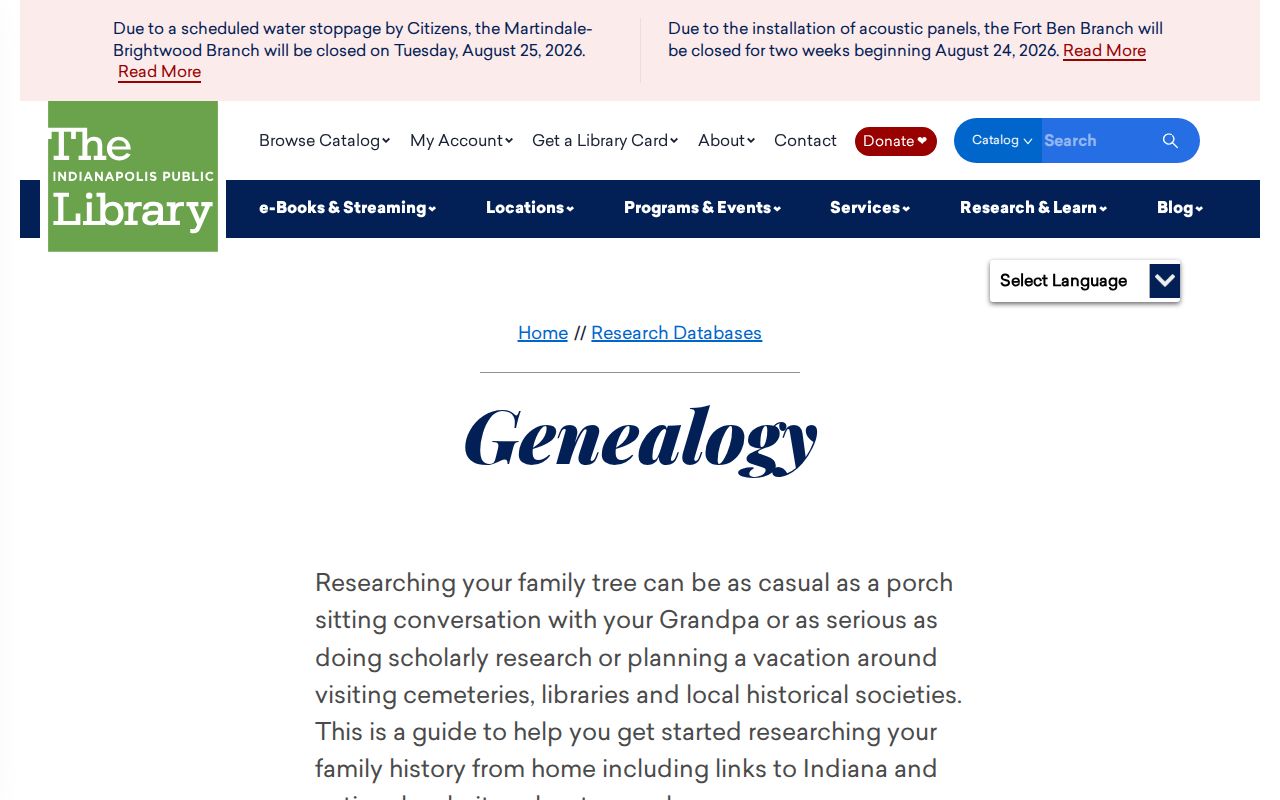
Library staff can help identify a bound or microfilmed volume when OCR or a digital viewer misses a surname.
The Special Collections page shows the route to deeper Marion County local-history material.
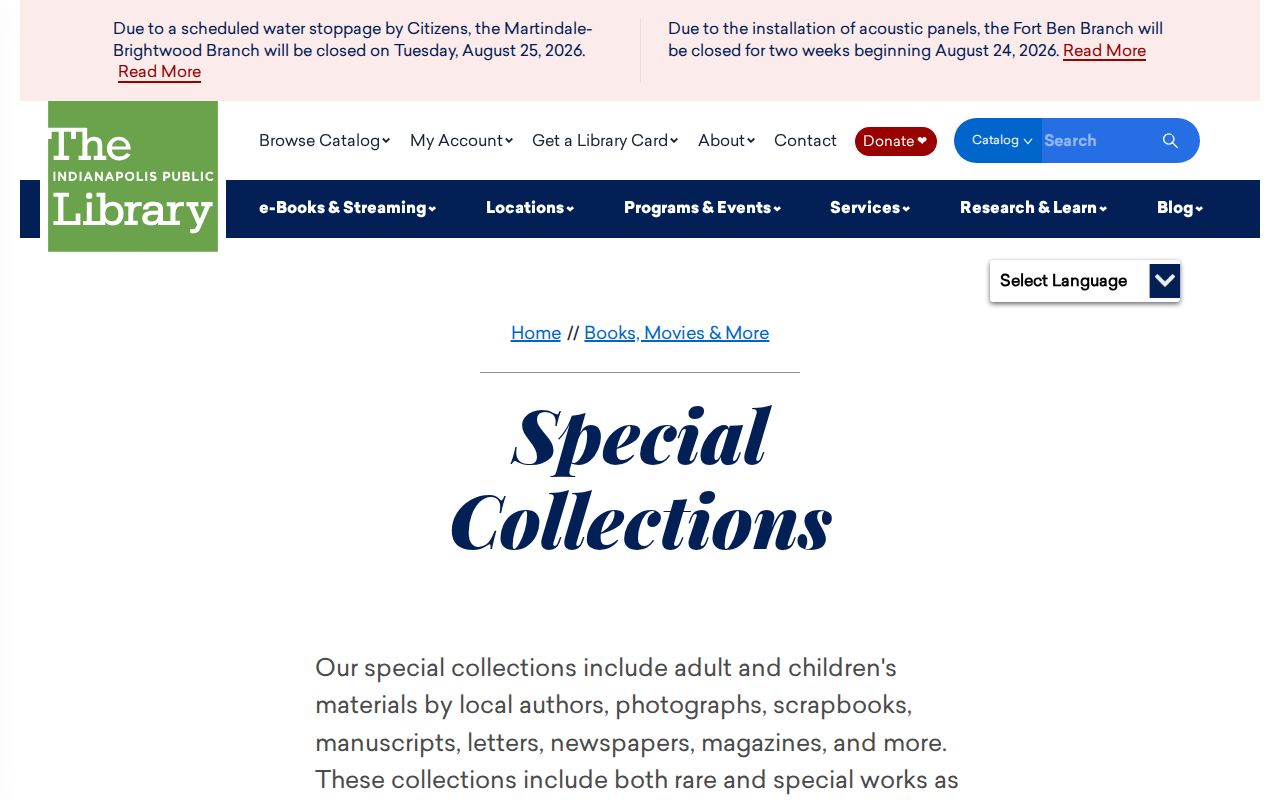
Those collections add clipping files, photographs, maps, and neighborhood sources around a directory hit.
Compare Marion County Archive Holdings
The IU and IndyPL partner collection routes researchers to directories, atlases, plat books, and Sanborn or Baist maps. The Indiana State Library adds county research guides, old books, microfilm, WPA indexes, and Indiana Legacy. The Indiana Historical Society reports manuscripts, photographs, printed works, and a reference room open Tuesday through Saturday from 10 a.m. to 5 p.m.; some material may require an appointment.
The partner collection page below shows how city directories connect to other Indianapolis Public Library digital holdings.

That bridge is useful when an address needs a map, photograph, or plat rather than another name index.
The Indiana Historical Society collections offer another staff-mediated and digital path.
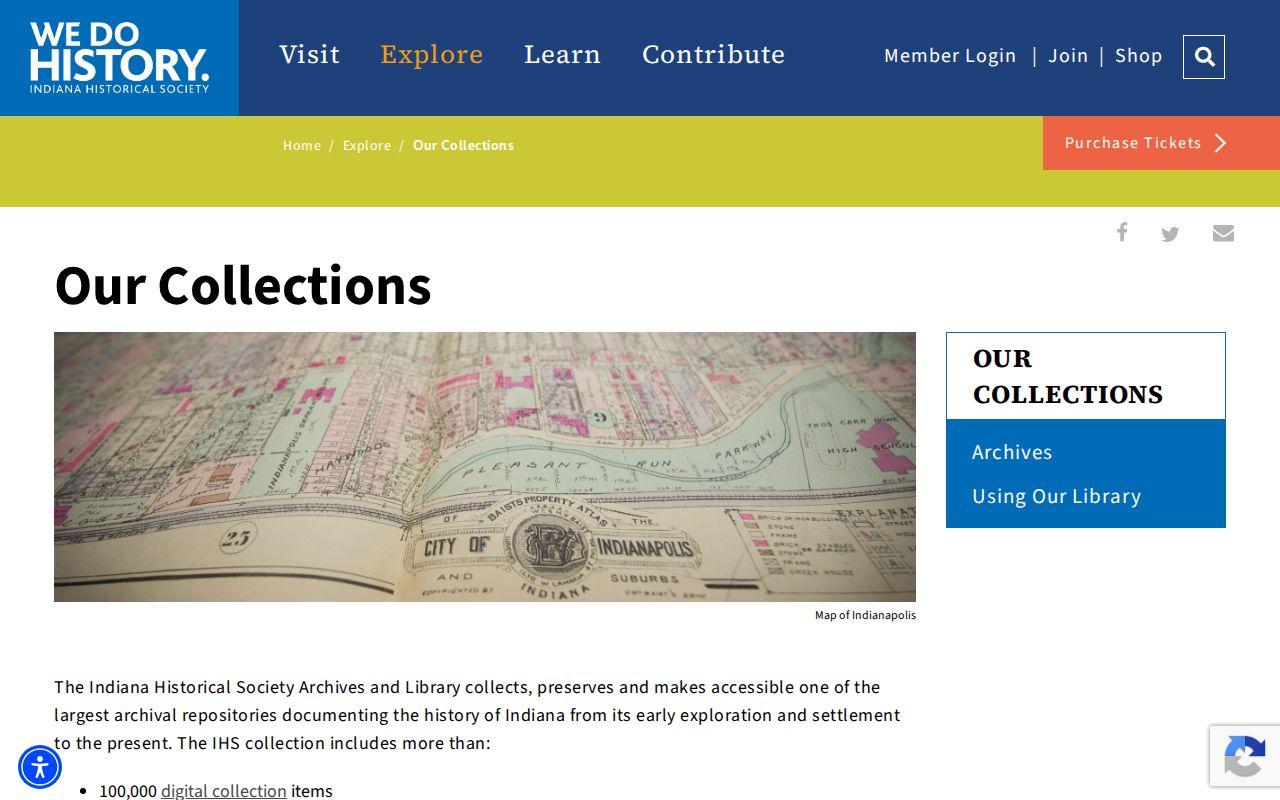
Search by surname, street, business, church, school, neighborhood, and decade, then request the specific collection item.
Note: APRA governs public agencies, not private historical societies or library-license terms.
Read Marion County Directory Entries
An inspected 1884 Indianapolis illustrated guide and business directory names John Q. Adams & Co., describes the firm as house movers, supplies a South Tennessee Street number, and includes a telephone number. That is a business-style listing, not a complete household record. Residential volumes may show more family detail, but each year must be read on its own terms.
| Name | Resident or firm name, sometimes with spouse or family notation |
|---|---|
| Work detail | Occupation, business description, firm, or office |
| Address | Residence or business street address as printed that year |
| Telephone | Present in some later or business entries, not guaranteed |
| Context | Alphabetical, category, advertisement, or nearby page entries |
- Criss-cross directory
- A later address-first or telephone-first arrangement used to reverse a known location into a listed name.
- Householder index
- A list centered on named household heads; its exact fields depend on the publisher and year.
- Abbreviation key
- The volume's own legend for shortened occupations, family terms, address marks, and other symbols.
Photograph or save the title page, abbreviation key, entry page, and stable image link. An owner or renter symbol was not verified across the complete Marion County run, so do not assign that meaning without reading the exact key. A city directory entry proves only what the publication printed for that year.
Reverse Marion County Directory Searches
IndyPL warns that before 1914 the directories generally list people by surname rather than working like a modern reverse directory. A complete year-by-year criss-cross run was not verified. For an address-first question, search a street guide within the same volume, read the alphabetical entry, and ask IndyPL, the State Library, or IHS for an exact reverse or telephone title.
Street addresses changed in 1887, 1899, and 1916. Tennessee became Capitol and Mississippi became Senate in 1895. Search both names and numbers, and use cross streets or a legal lot to hold the location steady. Suburban directories begin in 1957, so an outer Marion County address may fall outside earlier Indianapolis coverage.
Bridge Marion Directories with Maps
The 1903 directory map includes a street guide and an Irvington insert. It is a rare bridge between a historical district label, the street grid, and a city-directory search. The IU Indianapolis Sanborn and Baist collection adds Sanborn coverage from 1887, 1898 with updates, and 1914-1915 with updates through 1950, plus Baist volumes from 1916, 1927, and 1941.
The Sanborn and Baist collection appears below.
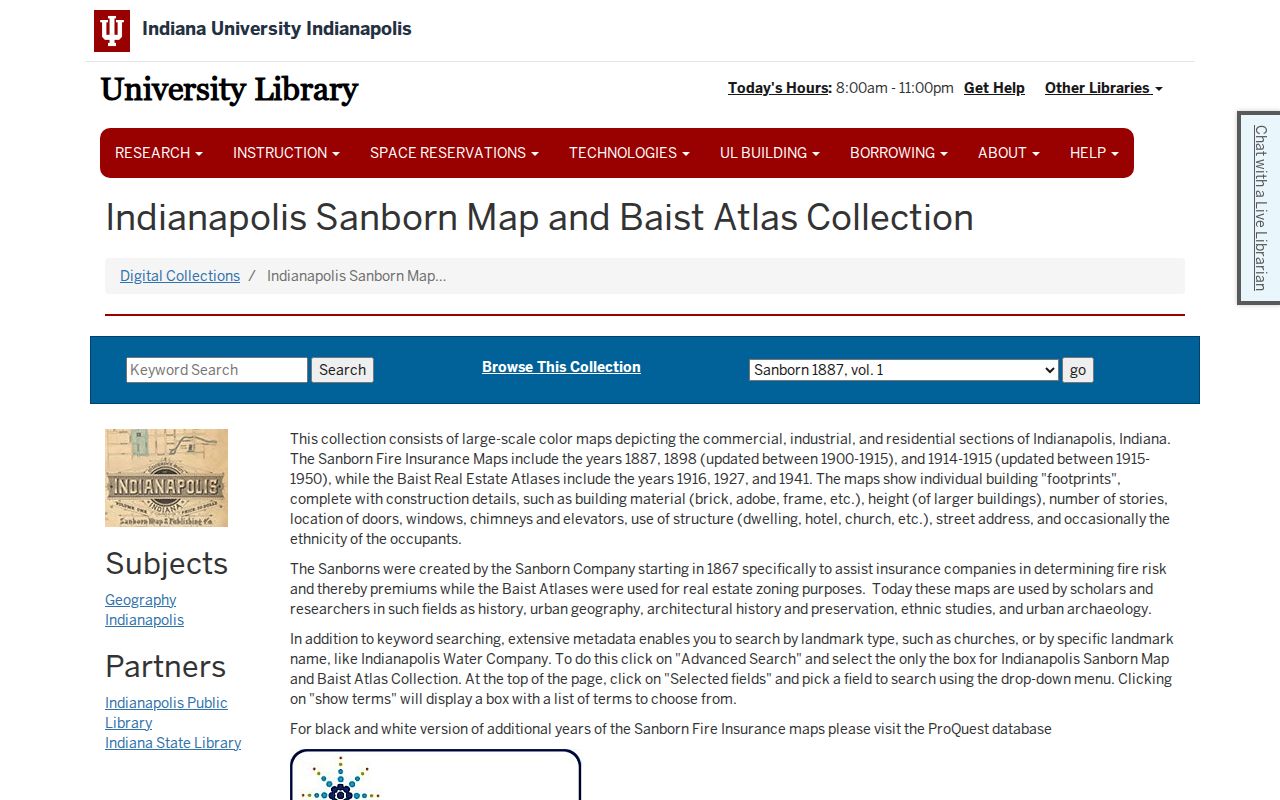
Map sheets may show footprints, construction, use, stories, openings, street numbers, and lot context. Pair them with a directory year because maps do not name every occupant.
| 1855 | Official Indianapolis directory collection begins. |
|---|---|
| 1887, 1899, 1916 | Address changes identified by IndyPL complicate direct comparisons. |
| Before 1914 | Alphabetical searching is generally more dependable than assumed reverse coverage. |
| 1957 | IndyPL identifies the addition of suburban directories. |
| 2001 | The all-published digital collection run ends. |
Extend Marion County Directory Clues
A person who drops from one annual volume may have moved, died, changed name, or simply gone unlisted. Indiana Legacy includes obituary, death, marriage, military, school, biography, and newspaper record types. IndyPL has newspaper microfilm and a clipping file. The Genealogical Society of Marion County offers newspaper, cemetery, church, school, land, hospital, and local project indexes.
Cemetery research can close a trail that a directory leaves open. Crown Hill's older official genealogy form describes a $5-per-name, roughly 30-minute service, though the fee should be reconfirmed. GSMC lists more than 250 cemetery sites and specialized local projects. Treat a memorial contribution as a clue until the cemetery or custodian confirms it.
Marion's State Library guide also preserves early deed and probate books and WPA marriage, birth, and death indexes. Those records bridge the gap between a printed directory name and an official event or land record without pretending the directory itself is a certificate.
Trace Marion County Family History
Directory years fill the space between public census schedules. The federal 72-year release rule makes the 1900 through 1950 censuses useful partners, while the loss of most 1890 schedules gives Indianapolis city directories, church books, tax and deed records, and newspapers extra weight for that decade.
- Choose the nearest directory year and search the surname exactly, then try initials, spouse notation, and variant spellings.
- Copy the full entry, page, title, publication year, imprint, and abbreviation-key meanings.
- Move one year at a time, recording each address or work detail and converting old street names when needed.
- Pair the household with a released census, noting ward, township, boundary, and same-name differences.
- Use maps to confirm the place, deeds to confirm title, and newspapers, probate, or cemetery records to explain the end of a trail.
A directory match should carry two identity anchors, such as name plus spouse, occupation, address, or nearby relative. Mark any identity conclusion as an inference until another source agrees. For current parcel work, the Marion County by-street search owns the modern address chain.
When a household drops out between volumes, search the Indianapolis News collection, Indiana Legacy, the Central Library clipping file, and Genealogical Society of Marion County cemetery material. A death notice, marriage item, church report, or business advertisement can explain the change. Record the newspaper title and date, then verify the event with the clerk, health department, cemetery, or probate file. This extra check is vital when initials or widow notations could point to more than one Marion County resident.
Note: A directory's publication year may not equal the year in which its information was gathered.